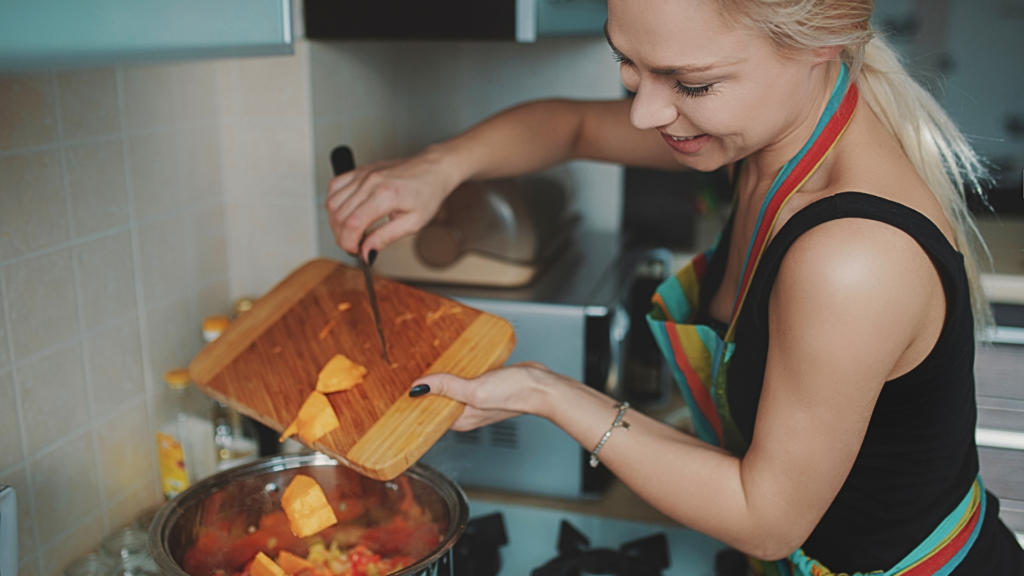
Whether you’re feeding one or a family, these habits take the chaos out of cooking.
Cooking isn’t just about following recipes — it’s about how your kitchen feels when you step into it. The best meals come together not from fancy gadgets or hours of prep, but from the little habits that make everything flow smoother.
If you’ve ever found yourself standing in front of your fridge at 6:30 p.m. wondering what to make, this post is for you. These small shifts can make cooking feel less like another chore and more like a rhythm you look forward to — a few minutes of calm at the end of the day.
1️⃣ Keep a “Prep Bowl” Nearby
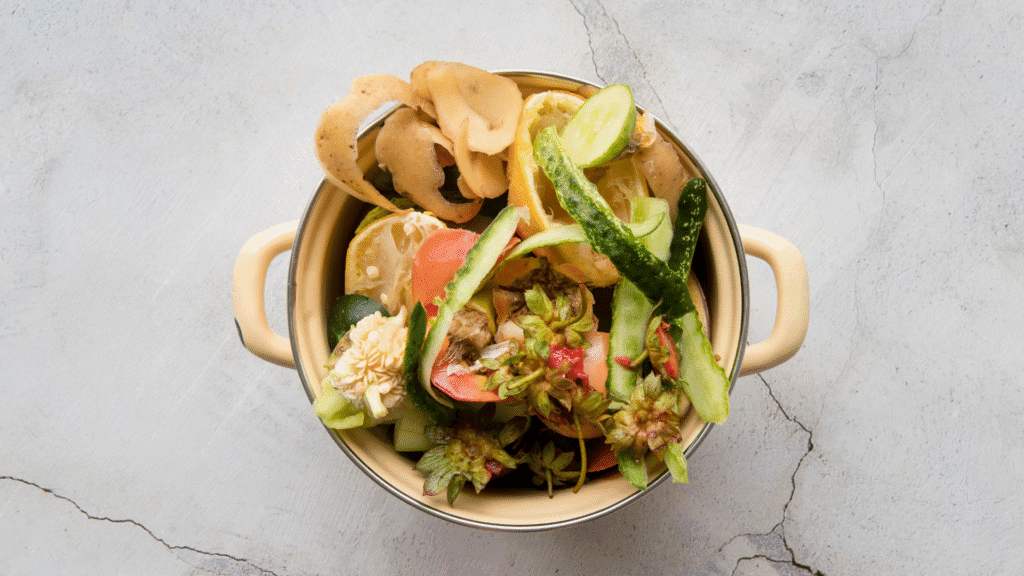
Let’s start simple. Every time you cook, grab a large mixing bowl and keep it on the counter. That’s your scrap zone.
As you peel, chop, or unwrap, toss everything — onion skins, veggie ends, packaging — into the bowl. It’s a tiny habit that keeps your counter clear, your cutting board open, and your brain focused.
No more running to the trash can every 30 seconds. When you’re done cooking, just empty the bowl once. You’ll be amazed how much calmer cleanup feels when the chaos has one home.
2️⃣ Salt and Olive Oil Within Reach
Good cooking isn’t about complex ingredients; it’s about using the right things at the right time.
Keep your salt, pepper, and olive oil right next to the stove. Use containers that make you want to reach for them — a small ceramic pinch bowl, a dark glass bottle.
When these staples are within arm’s reach, you start seasoning instinctively instead of as an afterthought. Your food will quietly get better, and cooking will feel less like a task and more like intuition.
3️⃣ Do a 5-Minute Reset After Dinner
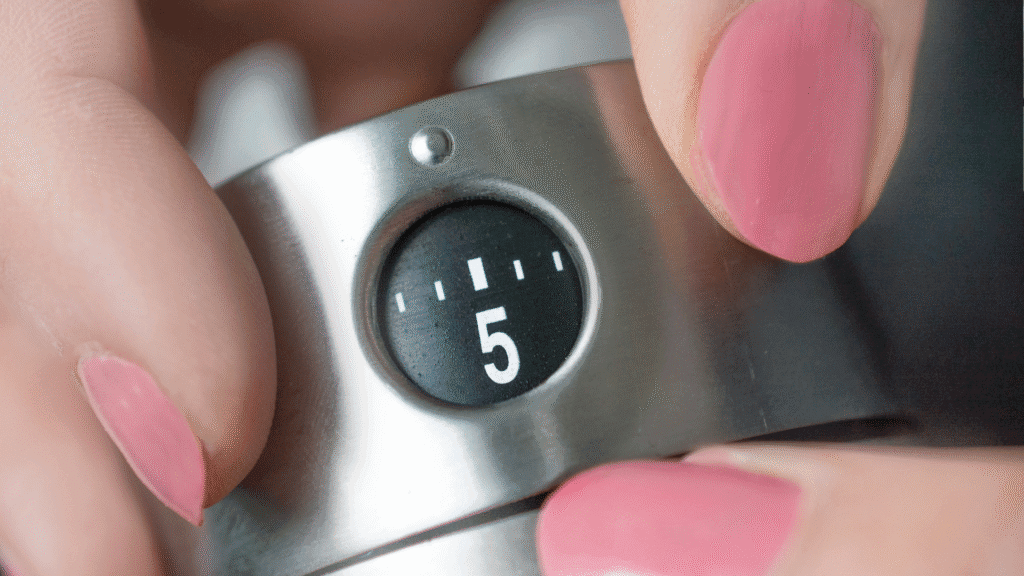
The five-minute rule is a kitchen life-changer. Before you leave the kitchen for the night, set a timer for five minutes — literally.
Wipe down the counters. Load the dishwasher. Fill your water bottle for tomorrow. Maybe even soak oats or set out the pan you’ll need in the morning.
You’re not aiming for spotless; you’re aiming for ready. Waking up to a reset kitchen means you start the next day ahead, not behind.
4️⃣ Use the Same Pan Twice
If you’re someone who hates dishes (hi, you’re not alone), this is your new favorite habit.
Before washing a pan, pause for five seconds. Could it be reused for something else? Maybe tonight’s roasted veggies become tomorrow’s breakfast hash. Maybe you can sauté tomorrow’s onions in the same pan you used for chicken.
It’s the easiest kind of meal planning — the lazy genius kind. You save time, use less water, and cut cleanup in half.
5️⃣ Keep a Running Grocery Note on Your Phone
We’ve all been there — mid-recipe, realizing the one thing we need isn’t there.
Keep a running grocery note (or shared list if you shop with someone) on your phone. As soon as you finish something — olive oil, vanilla, soy sauce — add it to the list right then.
It sounds small, but it removes the mental clutter of trying to remember what’s missing. Bonus points if you organize it by store section (produce, dairy, pantry). It’ll make shopping 10× faster.
6️⃣ Prep One “Anchor Ingredient” a Week
This one will change how you think about weeknight cooking.
Every Sunday — or whatever day feels calmest — cook one “anchor” ingredient. Something versatile, like:
- A batch of rice or quinoa
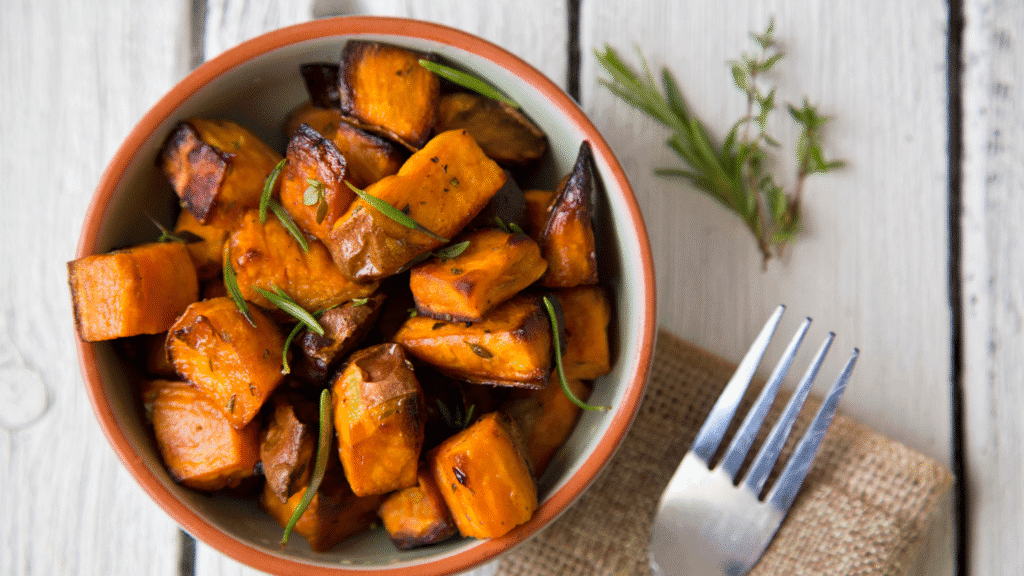
- Roasted sweet potatoes
- Shredded chicken or baked tofu
- A pot of lentils
- Hard-boiled eggs
That one thing becomes your week’s anchor. It’s the base you can build from when you don’t feel like cooking from scratch.
Example: roasted sweet potatoes become tacos, salad toppers, or blended soup. Cook once, enjoy three times.
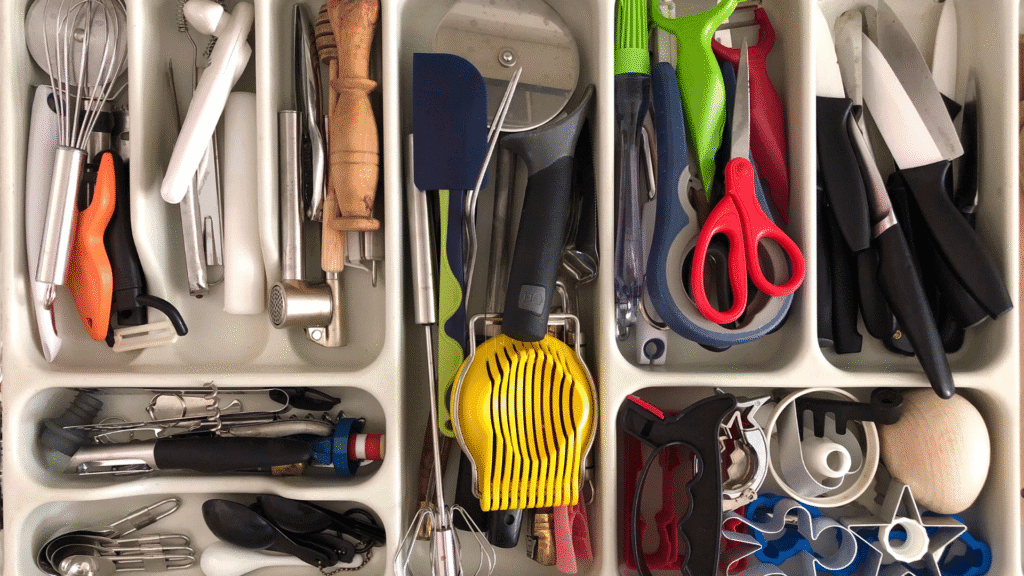
7️⃣ Designate a “Catch-All Drawer” (Intentionally)
Yes, I said it: keep a junk drawer. But make it an organized one.
Instead of fighting it, give it a purpose. Keep measuring spoons, chip clips, scissors, and pens in there. Use small containers or dividers to create zones.
That way, when you need a rubber band or your favorite teaspoon, you’ll actually find it. It’s not clutter — it’s a system for real life.
8️⃣ Light a Candle When You Start Cooking
This might be my favorite one. Lighting a candle when you cook feels like the tiniest luxury — but it shifts everything.
It tells your brain, this is your time now. The flame makes the space feel cozy, even if you’re just reheating leftovers.
Cooking becomes less about the task and more about the moment. Bonus: your kitchen will smell like something other than onions for once.
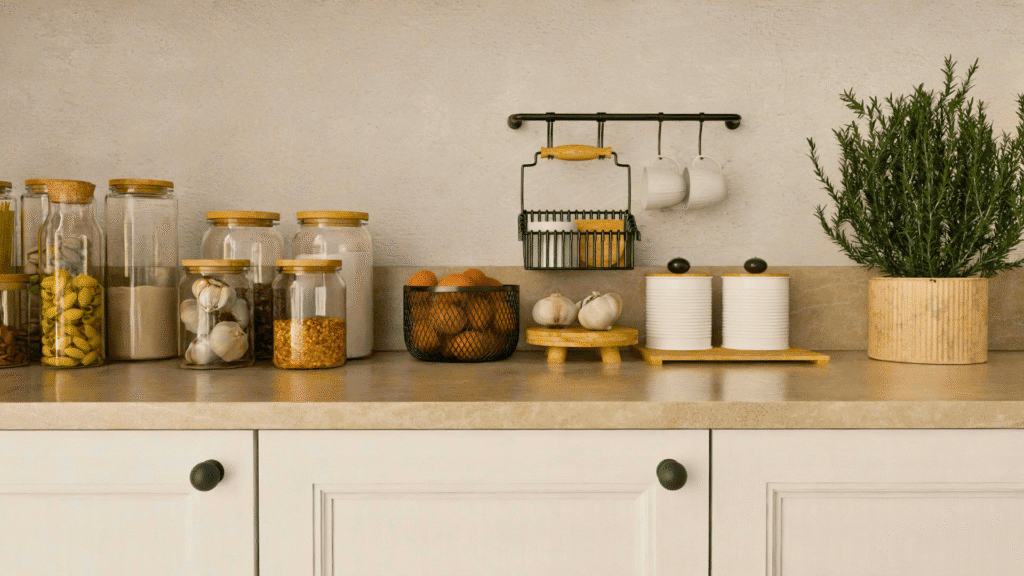
9️⃣ Display the Food You Actually Eat
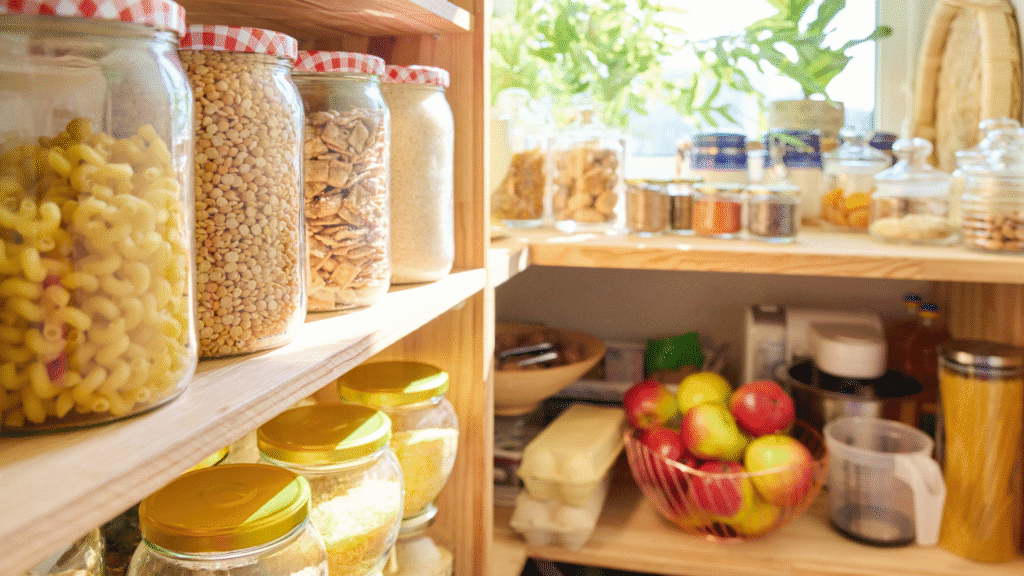
Clear glass jars aren’t just pretty — they’re powerful.
When you can see your food, you’re more likely to eat it. Keep fruit in a bowl on the counter. Store grains, nuts, or snacks in glass containers.
This trick makes healthy choices automatic and turns your kitchen into something that feels lived-in and loved, not hidden behind packaging.
Plus, when everything’s visible, you waste less because you actually remember what you have.
🔟 Celebrate Imperfect Meals
This might be the most important one.
You don’t need to cook like a chef to enjoy your kitchen. You don’t even need matching plates.
Make the food you have. Plate it nicely if you want to — or eat it standing at the counter if that’s what the night calls for. Light the candle, pour a drink, and call it dinner.
Cooking doesn’t have to be performative to be meaningful. You’re feeding yourself, your family, your friends — that’s the real kind of beautiful.
If you found these cozy soup ideas helpful, you might also love this guide:
👉 Grocery Store to Home: Keeping Your Food Fresher, Longer
https://www.featuredbite.com/grocery-store-to-home-keeping-your-food/
🌿 Bonus Habit: Make Cooking Your “Pause”
If you can, stop seeing cooking as something you have to do, and start seeing it as something you get to do.
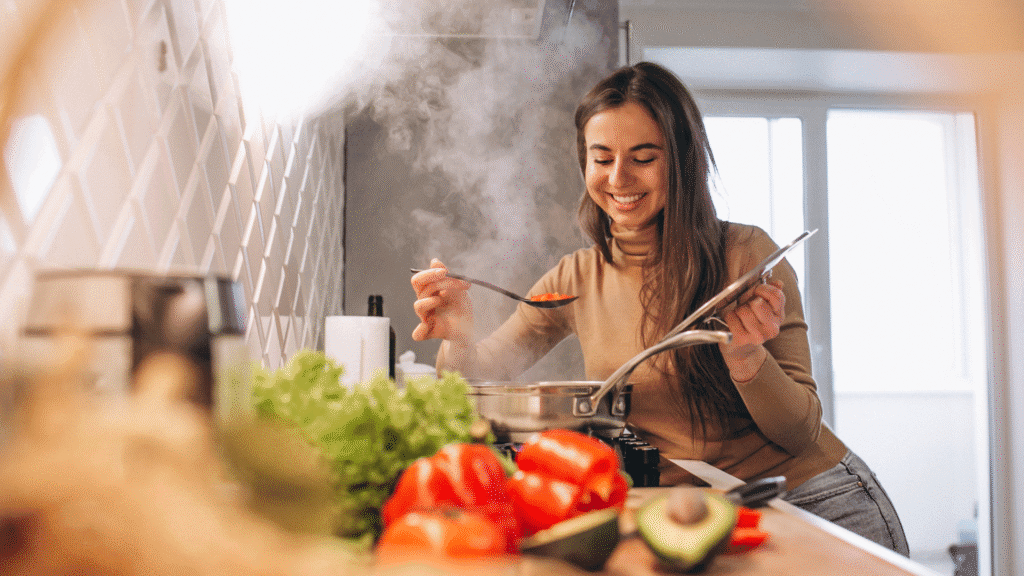
Put on music. Pour a small drink. Open a window. The act of cooking — chopping, stirring, tasting — can be grounding.
Even a ten-minute dinner becomes a reset for your day when you allow it to be slow and sensory.
These habits aren’t rules — they’re little rituals that make everyday cooking lighter, calmer, and more joyful.
You don’t need a brand-new kitchen or fancy tools to love being in it. You just need a few systems that make it work for you.
Here’s the thing — cooking isn’t just about what ends up on the plate. It’s about the space you create around it. The little routines that make you pause in the middle of a busy day and remember that life doesn’t have to be rushed to be good.
When you start building these small kitchen habits, something shifts. The clutter doesn’t feel as overwhelming, and the act of cooking starts to feel less like a chore and more like a rhythm. You find yourself humming while you stir, or stopping to breathe in the smell of garlic just because it’s comforting. You catch yourself smiling when you realize you’ve made something out of almost nothing — again.
A kitchen isn’t defined by marble counters or perfect lighting. It’s defined by what happens inside it — the quiet confidence that builds when you cook for yourself, the calm that comes from simple order, and the tiny bits of joy tucked into the everyday moments: the first sip of coffee, the sound of something sizzling, the laughter that fills the air when you cook for someone you love.
And even when things don’t go as planned — when the sauce breaks, or you burn the toast, or dinner ends up being cereal — it still counts. You still showed up. You still fed yourself. You still made something. That matters more than anything.
So be gentle with yourself in the kitchen. Let it be imperfect. Let it be yours. Because the goal isn’t to be the best cook — it’s to create a space where you actually want to be. A place where you can slow down, unwind, and feel like yourself again.
Cooking, in its simplest form, is self-care disguised as dinner.
And maybe that’s what makes it beautiful — not the recipes or the photos or the presentation, but the reminder that we all have this quiet, everyday ritual that connects us back to something real.
So the next time you light that candle, pour a drink, or stir a pot of soup, take a breath. You’re doing more than making food — you’re creating a moment that feeds something deeper.