The 5 Areas in Your Home That Quietly Create Stress
There are obvious messes.
A pile of laundry on the couch.
Dishes in the sink.
Shoes scattered by the door.
Those are easy to see. Easy to name. Easy to blame when you feel overwhelmed.
But the stress most women carry in their homes doesn’t usually come from the obvious mess.
It comes from the small, repeatable friction points that never quite get solved.
The places you walk past ten times a day.
The drawers that stick.
The pile that never fully disappears.
The counter that never feels clear, even when it technically is.
These aren’t dramatic problems.
They’re not “spring clean your whole house” issues.
They’re quiet.
And because they’re quiet, they stay.
Here are five areas that tend to quietly create stress — and what actually helps.
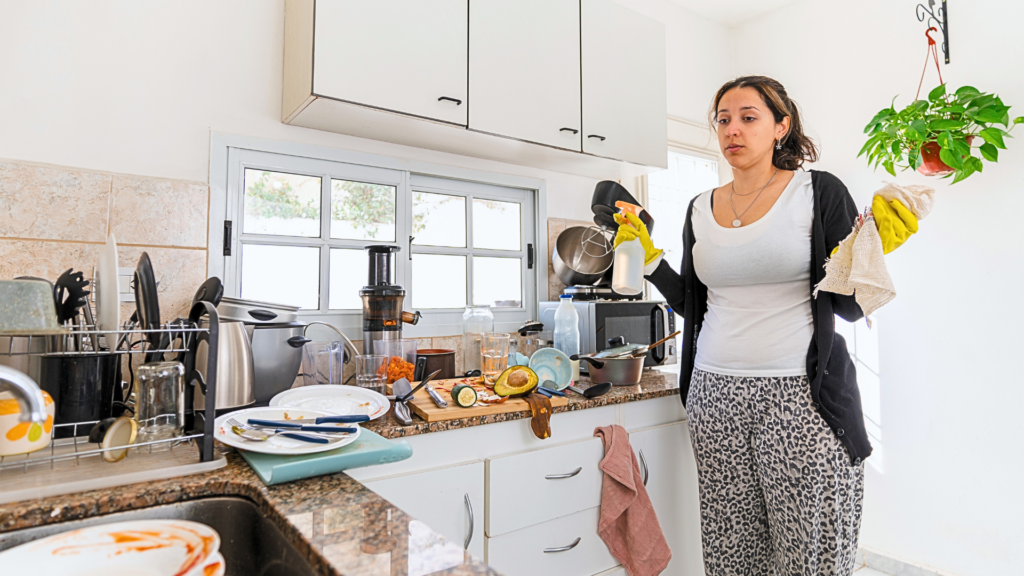
1. The Kitchen Counter That’s Never Really Clear
This one almost always shows up first.
You wipe it down.
You move things around.
You try to keep it minimal.
But somehow it never looks calm.
It’s not usually clutter. It’s overflow.
Mail that lands there.
Supplements.
Water bottles.
Appliances that don’t have a home.
School papers.
Keys.
The counter becomes neutral territory for everything that doesn’t belong somewhere specific.
And when the counter feels crowded, the kitchen feels heavy.
The fix isn’t a new container or aesthetic baskets.
It’s deciding what lives there permanently.
Pick 3 things max that stay out. That’s it.
Everything else needs one of three outcomes:
• A drawer
• A hook
• A weekly reset basket
If you don’t want to walk something upstairs or file it immediately, keep one contained basket. Not five piles. One.
When the counter has breathing room, your brain does too.
2. The Entryway Drop Zone
This is one of the most emotionally loaded spots in the house.
Because it’s where everyone dumps the day.
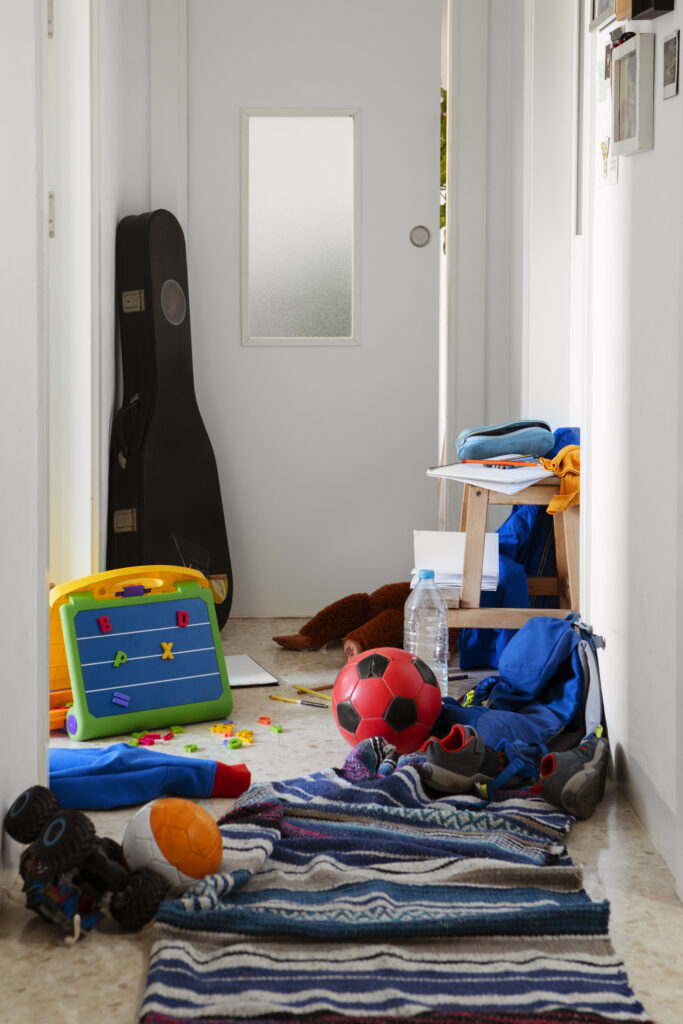
Shoes.
Bags.
Jackets.
Mail.
Sports gear.
Packages.
If this space feels chaotic, the whole house feels chaotic before you even get inside.
The stress isn’t the stuff.
It’s the friction.
You trip over shoes.
You can’t find keys.
You’re rushing and everything feels stacked against you.
The solution isn’t a mudroom makeover.
It’s reducing decisions.
Hooks at shoulder height.
A tray for keys.
One shoe bin per person.
A small basket for incoming mail.
Not pretty. Functional.
If it takes two seconds to put something down correctly, it will get done.
If it takes effort, it won’t.
Organizing for the way your family actually moves matters more than organizing for photos.
3. The Paper Pile You Pretend Isn’t There
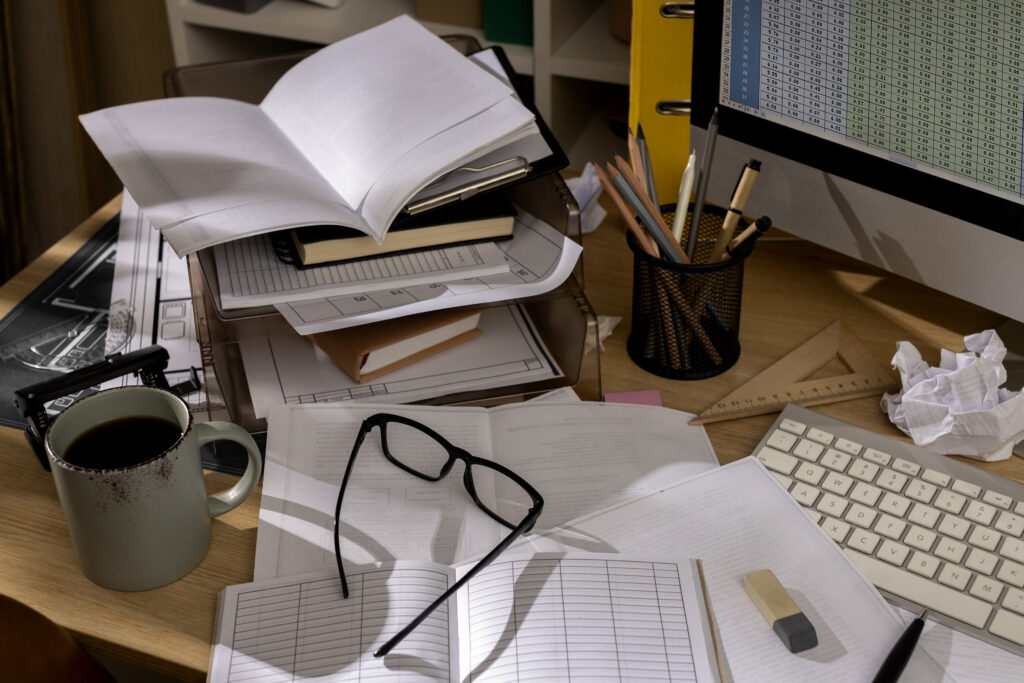
Paper creates low-grade stress because it represents unfinished decisions.
Bills.
School forms.
Appointment reminders.
Random printouts.
Warranty papers.
Handwritten notes.
Even if it’s small, it pulls at you.
You know you need to go through it.
You just don’t have the mental space.
Most people try to “get organized” with filing systems.
What actually works is a three-folder method:
• Action
• File
• Toss
That’s it.
Once a week, you empty Action.
File gets stored.
Toss leaves immediately.
No color coding.
No elaborate binders.
No guilt.
Paper stress isn’t about storage.
It’s about closing loops.
4. The Drawer That Sticks or Won’t Close
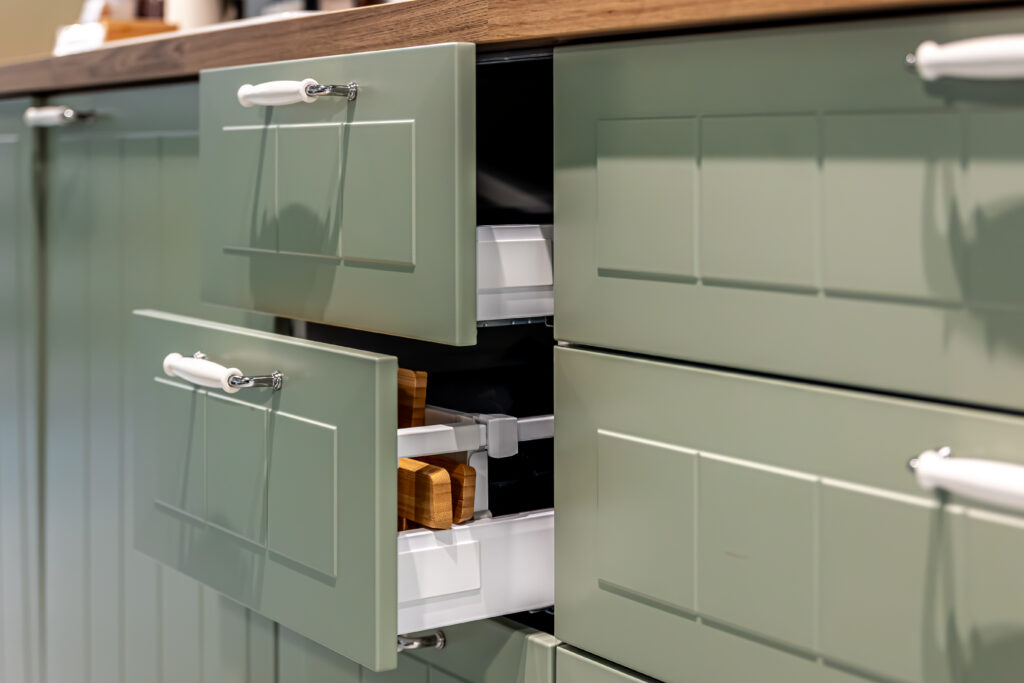
This sounds small, but it adds up.
The junk drawer that’s too full.
The utensil drawer that catches.
The bathroom drawer that doesn’t glide smoothly.
Every time it resists, your nervous system registers it as friction.
You don’t think, “This drawer is stressful.”
You think, “Why is everything harder than it should be?”
That’s what builds tension.
Pick one drawer.
Empty it fully.
Remove half.
Be honest about what you actually use.
You don’t need five extra chip clips.
You don’t need twenty random batteries.
You don’t need expired coupons.
Smooth drawers create smooth movement.
And smooth movement lowers stress more than people realize.
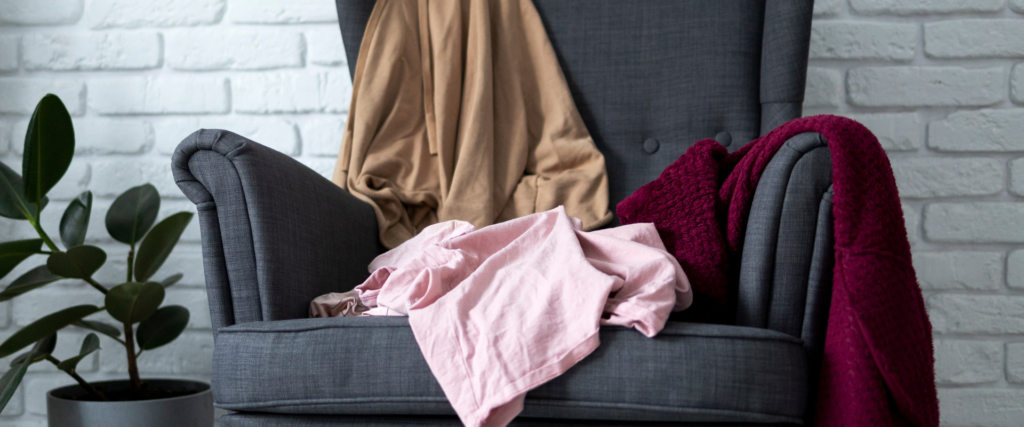
5. The Bedroom Surface That Collects Everything
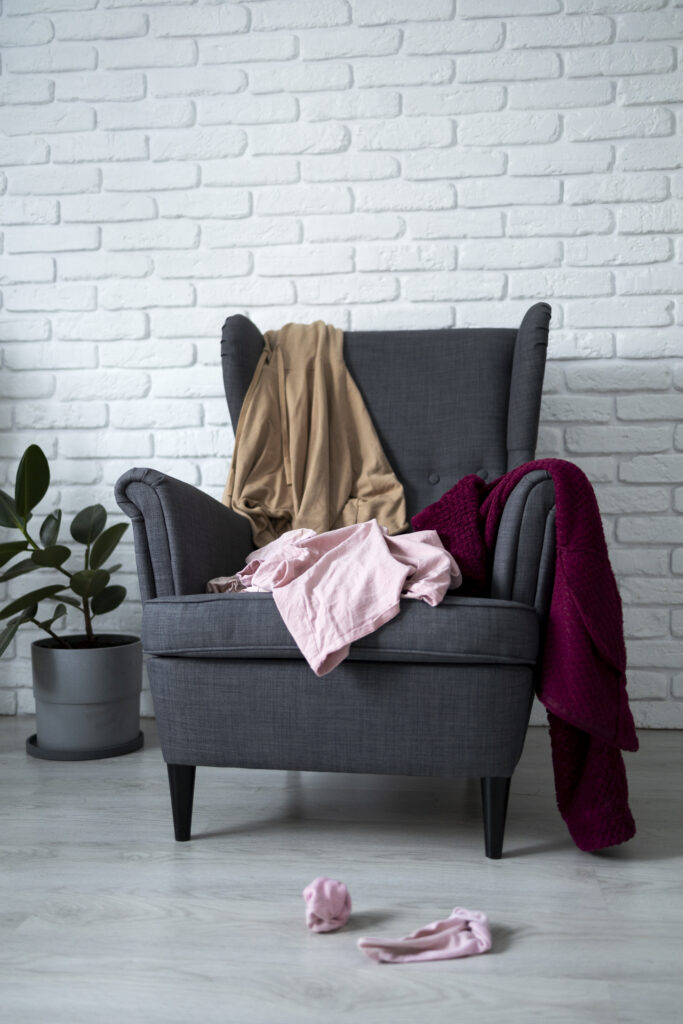
Nightstands.
Dressers.
The corner chair.
These become catch-alls for life.
Jewelry.
Clothes.
Water glasses.
Receipts.
Random products.
Books you’re not reading.
You see it when you wake up.
You see it before bed.
And even if the rest of the house is handled, this space whispers, “You’re behind.”
Bedrooms don’t need to be minimal.
They need to feel restful.
Clear one surface fully.
Not styled.
Not curated.
Just clear.
That alone shifts the tone of the room.
You don’t need new furniture.
You need less surface decision fatigue.
Why These Areas Matter More Than Deep Cleaning
Most stress in a home doesn’t come from dirt.
It comes from unfinished movement.
From small decisions you keep postponing.
From friction points that repeat daily.
From systems that don’t quite match how you live.
Deep cleaning feels productive.
But friction removal feels calming.
And calming is what most busy women are actually craving.
You don’t need to overhaul your whole house.
You need to identify the spots that create resistance.
Then remove resistance.
One spot at a time.
If You’re Feeling Overwhelmed
Don’t tackle all five.
Pick the one that annoys you most.
Clear it.
Adjust it.
Simplify it.
Then stop.
Small changes that stick are better than big changes that collapse in a week.
Homes don’t get calmer because of aesthetic bins.
They get calmer because daily friction is reduced.
And that’s something you can actually control.
If you’re ready to take it one step further without overhauling your whole house, these two are a good place to start:
➡️ A Nightly Kitchen Reset That Makes Tomorrow Easier
https://www.featuredbite.com/nightly-kitchen-reset/
➡️ Kitchen Cleaning Hacks That Actually Work
https://www.featuredbite.com/kitchen-cleaning-hacks-that-actually-work/
Both focus on reducing friction in the spaces that tend to create the most daily stress.Loking for something new to make? Start here.