
How Often to Clean Everyday Household Items
There are a lot of cleaning schedules online that look impressive, color-coded, detailed, and built for someone who apparently has three uninterrupted hours every afternoon.
Most of us don’t.
If you work full time, have kids, cook regularly, live with pets, or simply feel tired by the end of the day, cleaning can easily become something that feels constantly unfinished.
I’ve learned that the goal isn’t a spotless house. It’s a house that doesn’t quietly stress you out.
This schedule isn’t about perfection. It’s about preventing that moment when you suddenly look around and think, “How did it get this bad?”
It’s built around small resets and realistic timing.
And if you miss a day? Nothing collapses.
First: The Only Rule That Actually Matters
If a cleaning system makes you feel behind, it’s not realistic.
This rhythm is flexible. Think of it as a guide — not a contract.
You’re allowed to stretch weekly tasks. You’re allowed to skip biweekly ones during chaotic seasons. You’re allowed to move things around.
The goal is steadiness, not intensity.
Daily: The 5-Minute Reset (Not a Deep Clean)

Focus areas:
• Kitchen counters
• Sink basin
• Stove top (quick wipe)
• One main living surface
• Bathroom sink
This should take about five minutes total.
Not five minutes per room. Five minutes total.
Daily resets are about visual calm. When counters are clear and wiped down, the entire house feels less chaotic — even if laundry is waiting and toys are on the floor.
If nothing else happens, wipe the kitchen before bed.
That one habit changes how mornings feel.
Weekly: The Comfort Maintenance Layer
Weekly priorities:
• Sheets
• Towels
• Bathroom surfaces
• High-traffic floors
• Trash bins
These are the things that affect comfort and hygiene.
But here’s the adjustment busy households need:
If you miss one week of sheets, the world does not end.
If towels go eight days instead of seven, it’s fine.
The purpose of weekly tasks is to prevent buildup, not create pressure.
Bathrooms need a wipe more than a scrub. Floors need attention where people actually walk — not perfection in corners.
This is maintenance, not performance.
Every Two Weeks: The Quiet Spots That Sneak Up on You

Biweekly rotation:
• Light switches
• Door handles
• Microwave interior
• Fridge handles
• Baseboards (main areas only)
These are “when I remember” tasks.
They don’t need urgency. They just need occasional attention.
If life is busy, choose one of these per week instead of all at once.
The key is not letting them go untouched for months.
Monthly: Protecting the Machines That Protect You
Monthly maintenance:
• Fridge shelves
• Dishwasher filter
• Washing machine cleaning cycle
• Oven wipe
• Vacuum under cushions
Busy households rely on appliances constantly.
When machines work well, everything feels easier.
Cleaning a dishwasher filter takes a few minutes and prevents smell. Running a washing machine cleaning cycle prevents residue buildup that transfers to clothes.
This is less about aesthetics and more about avoiding future frustration.
Seasonally: A Gentle Reset (Not a Marathon)
Seasonal rotation:
• Windows
• Ceiling fans
• Closet edit
• Pantry expiration check
• Under-bed storage
You do not need a “spring cleaning weekend.”
Choose one task per week over a season.
That’s it.
Seasonal resets are about preventing clutter creep and forgotten corners. They’re not about emptying every drawer in your house.
What Happens If You Fall Behind?

Nothing catastrophic.
That’s the point of this rhythm.
If daily resets are skipped for a few days, do one five-minute catch-up.
If weekly tasks pile up, pick the one that gives the biggest visual win.
Momentum matters more than catching up perfectly.
Busy homes are lived in. That’s not failure — that’s function.
How to Adjust This for an Active Household
Have toddlers?
Focus on floors and surfaces.
Have teens?
Prioritize bathrooms.
Work long hours?
Shrink daily tasks to just kitchen + sink.
Cook heavily?
Wipe backsplash and stove more often.
Live in a small apartment?
Reduce seasonal tasks dramatically.
Cleaning frequency should match usage, not idealized standards.
A Final Perspective
The reason many cleaning systems fail isn’t because people are lazy.
It’s because they’re built for unlimited time and energy.
A realistic cleaning schedule supports your life. It doesn’t compete with it.
If your home feels calmer most days than it did before, it’s working.
Not perfect. Working.
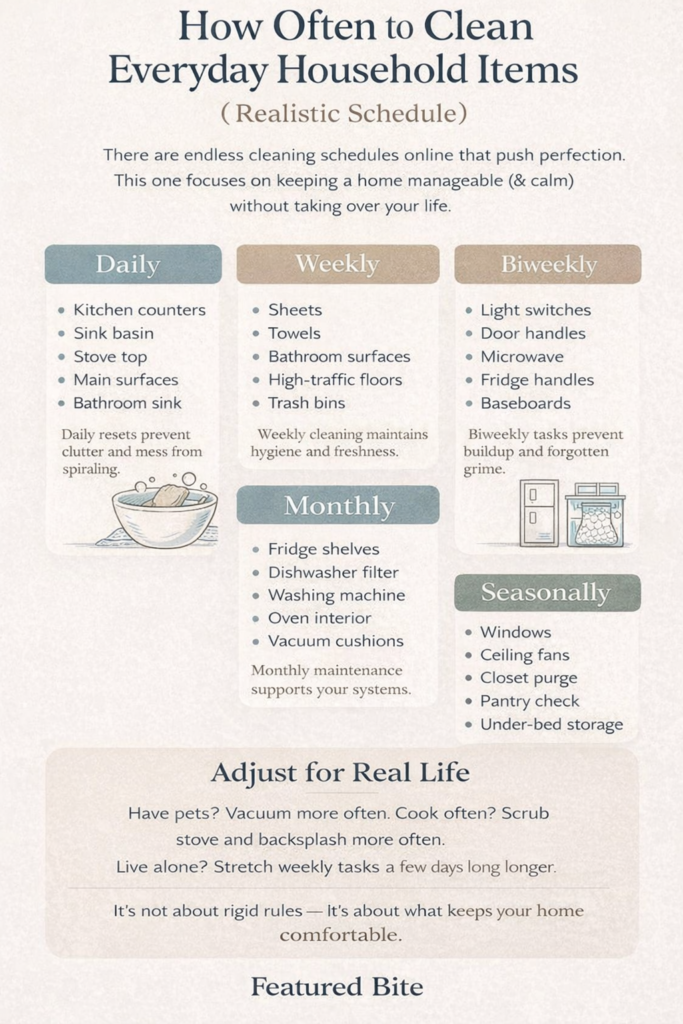
Daily Cleaning Schedule (5-Minute Reset)
These quick tasks prevent visible clutter and surface buildup.
• Wipe kitchen counters
• Rinse and wipe sink basin
• Quick stove top wipe
• Clear one main living surface
• Wipe bathroom sink
Focus: visual reset and surface hygiene.
Weekly Cleaning Checklist
These tasks maintain comfort and cleanliness in high-use areas.
• Wash sheets
• Wash towels
• Clean bathroom surfaces
• Vacuum or mop high-traffic floors
• Wipe trash bins
Focus: hygiene and odor prevention.
Biweekly Cleaning Tasks
These areas accumulate grime slowly and need occasional attention.
• Light switches
• Door handles
• Microwave interior
• Fridge handles
• Baseboards (main rooms)
Focus: preventing hidden buildup.
Monthly Home Maintenance Tasks
These tasks protect appliances and systems.
• Clean fridge shelves
• Check and clean dishwasher filter
• Run washing machine cleaning cycle
• Wipe oven interior
• Vacuum under couch cushions
Focus: preventing future mechanical or odor issues.
Seasonal Cleaning Rotation
These tasks reset overlooked spaces.
• Clean windows
• Dust ceiling fans
• Edit closets
• Check pantry expiration dates
• Clean under-bed storage
Focus: rotation, not marathon cleaning.
How Often Should You Clean Your House?
The honest answer: as often as your home requires to stay comfortable.
Cleaning frequency should match:
• Number of people
• Pets
• Cooking habits
• Square footage
• Lifestyle pace
For most busy households, daily resets + weekly hygiene + monthly maintenance is enough to keep a home manageable without constant deep cleaning.