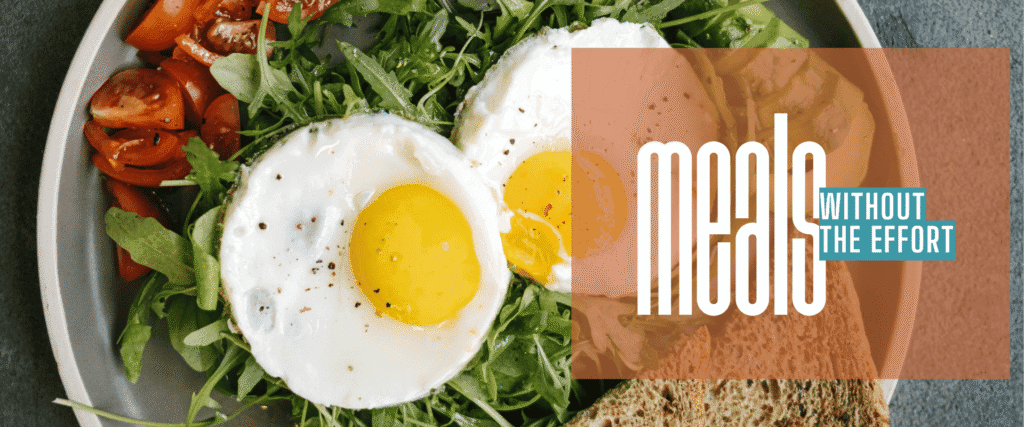
Effortless Meals
When cooking burnout hits, the issue usually isn’t a lack of ideas — it’s the cumulative weight of decisions.
Food becomes one more thing to solve instead of something that supports the day. What helps most in these moments isn’t novelty or inspiration, but reliability. Meals that don’t require negotiating with yourself. Meals that work whether you’re hungry, distracted, tired, or just uninterested.
Low-effort food isn’t about shortcuts. It’s about designing meals that tolerate indifference. Meals that don’t punish you for doing the bare minimum.
The reason the meals in this post hold up over time is simple: they don’t ask for emotional buy-in. They don’t need perfect ingredients, perfect timing, or perfect appetite. They just need you to show up briefly.
Why Structural Simplicity Matters More Than Speed
Speed is often framed as the goal of easy cooking, but speed alone doesn’t reduce burnout. A fast meal can still feel exhausting if it requires coordination, attention, or cleanup. Structural simplicity matters more.
A structurally simple meal usually has:
- one main heat source
- one or two flexible components
- no dependence on timing
- no “ruin point”
This is why meals like eggs and toast outperform faster but fussier options. You can pause halfway through. You can undercook or overcook slightly. You can eat part now and part later. Nothing collapses if your focus slips.
Eggs with Grape Tomatoes and Toast: Why This Meal Keeps Returning
This meal deserves extra attention because it demonstrates everything effortless food should do.
Eggs with grape tomatoes and toast work because each element is independently forgiving. Tomatoes don’t need seasoning beyond salt and oil. Eggs can be cooked in multiple ways without changing the outcome. Toast acts as both structure and insurance — it turns whatever lands on it into a meal.
The tomatoes matter more than it seems. Grape or cherry tomatoes cook quickly and concentrate their sweetness without needing long roasting times. They become rich enough to feel intentional, even when you didn’t plan anything.
This meal also scales quietly. One egg or three. One slice of toast or two. A handful of tomatoes or whatever is left in the container. There’s no wrong proportion.
This is food that adapts to you, not the other way around.
Toast as Infrastructure, Not a Fallback
Toast appears multiple times in low-effort eating for a reason. It’s not filler. It’s infrastructure.
Toast:
- absorbs flavor
- provides texture
- stretches small amounts of food into something satisfying
- gives structure to otherwise loose meals
This is why toast works equally well with eggs, cheese, leftovers, or sweet toppings. It allows incomplete food to feel finished.
And importantly, toast doesn’t demand commitment. You can make one slice. You can stop. You can add another later.
That flexibility matters more than variety when energy is low.
Eggs Beyond the Obvious
Eggs aren’t just a protein source — they’re a binding agent for effort. They connect leftovers, stretch small quantities, and turn fragments into meals.
Fried eggs over rice work because the yolk becomes the sauce. Scrambled eggs folded into vegetables work because they soften texture and add richness without effort. Hard-boiled eggs work because they remove cooking from the equation entirely.
Eggs tolerate distraction. You can walk away briefly. You can cook them imperfectly. You can eat them warm or cold. Very few foods offer that kind of forgiveness.
That’s why they remain one of the most reliable low-effort foods across cultures and cuisines.
Pasta Without Ambition: A Philosophy, Not a Recipe
Ambitious pasta requires coordination. Low-effort pasta removes it.
The goal here is not balance, presentation, or depth of flavor. The goal is warmth, satiety, and ease. Olive oil and butter aren’t shortcuts — they’re stabilizers. Cheese adds density without extra steps. Greens soften quickly and forgive timing.
This is pasta that can be interrupted. Pasta that can wait while you sit down. Pasta that doesn’t mind if you skip an ingredient.
This approach also makes pasta reusable. Leftovers don’t need reheating finesse. They can be eaten cold, rewarmed quickly, or repurposed.
Effortless pasta is about lowering stakes.
Soup as a Holding Pattern, Not a Solution
Soup often gets framed as a reset food, but its real value lies in its neutrality. Soup allows you to eat without deciding anything beyond temperature.
Brothy soups especially act as holding patterns — they sustain without demanding appetite. They don’t require sides. They don’t create expectations.
Soup works on days when hunger is inconsistent or when eating feels like maintenance rather than enjoyment. It also allows partial consumption without guilt. You don’t have to finish it for it to count.
That permission is crucial when cooking energy is depleted.
Snack Plates and the End of Meal Performance
Snack plates succeed because they remove performance from eating. There’s no sequencing. No rules. No expectation of completion.
They also restore agency. You choose what to eat in the moment, not what you decided hours earlier. That autonomy reduces resistance — especially after periods of rigid meal structure.
Snack plates work best when treated as intentional meals, not placeholders. They benefit from balance, but not perfection. One protein, one carbohydrate, one fresh element is enough.
The absence of cooking is not the absence of nourishment.
Rice Bowls as a Neutral Canvas
Rice bowls succeed for the same reason toast does: neutrality. Rice absorbs flavor, stretches leftovers, and creates fullness without requiring complexity.
The key to low-effort bowls is avoiding the temptation to overbuild. One protein, one vegetable, one sauce or seasoning is sufficient. Anything more increases cognitive load.
Rice bowls tolerate repetition. They don’t mind sameness. They exist to carry food, not to impress.
Leftovers as Ingredients, Not Obligations
Burnout intensifies when leftovers are framed as duties. Reframing them as ingredients restores choice.
The mental shift is subtle but powerful:
- you are not eating “last night’s dinner again”
- you are using components that already exist
This reframing removes resentment. It also reduces waste without moralizing it.
Leftovers function best when they are allowed to change form. Sandwiches, bowls, eggs, soups — these formats absorb leftovers gracefully.
Warm Comfort Without Commitment
Spinach artichoke dip works here not because it’s indulgent, but because it’s contained. It doesn’t sprawl into sides, courses, or timing. It’s warm, familiar, and self-contained.
Served simply — with bread or vegetables — it becomes a meal that feels intentional without requiring effort. It also reheats well and doesn’t demand perfect timing.
Comfort doesn’t have to be elaborate to be effective.
Repetition Is Not Failure
One of the biggest barriers to effortless eating is the belief that repetition equals laziness or lack of creativity. In reality, repetition is efficiency. It’s how habits form. It’s how friction decreases.
The meals in this post are designed to be repeated. That’s their strength. They don’t require re-learning. They don’t depend on novelty. They exist to support the day, not dominate it.
Letting Food Fade Into the Background
The ultimate goal of effortless meals isn’t convenience — it’s relief. Relief from thinking, planning, optimizing, and performing.
When food becomes quiet, the rest of life has room again.
These meals don’t ask for enthusiasm. They don’t require inspiration. They just show up and do their job.
And sometimes, that’s exactly what you need.
If you’re ever craving something warm and comforting, this spinach artichoke dip is always a hit:
➡️ Hot & Bubbly Spinach Artichoke Dip
Looking for something new to make? Start here.